
EQUIPMENT
Industrial curing ovens for insulation
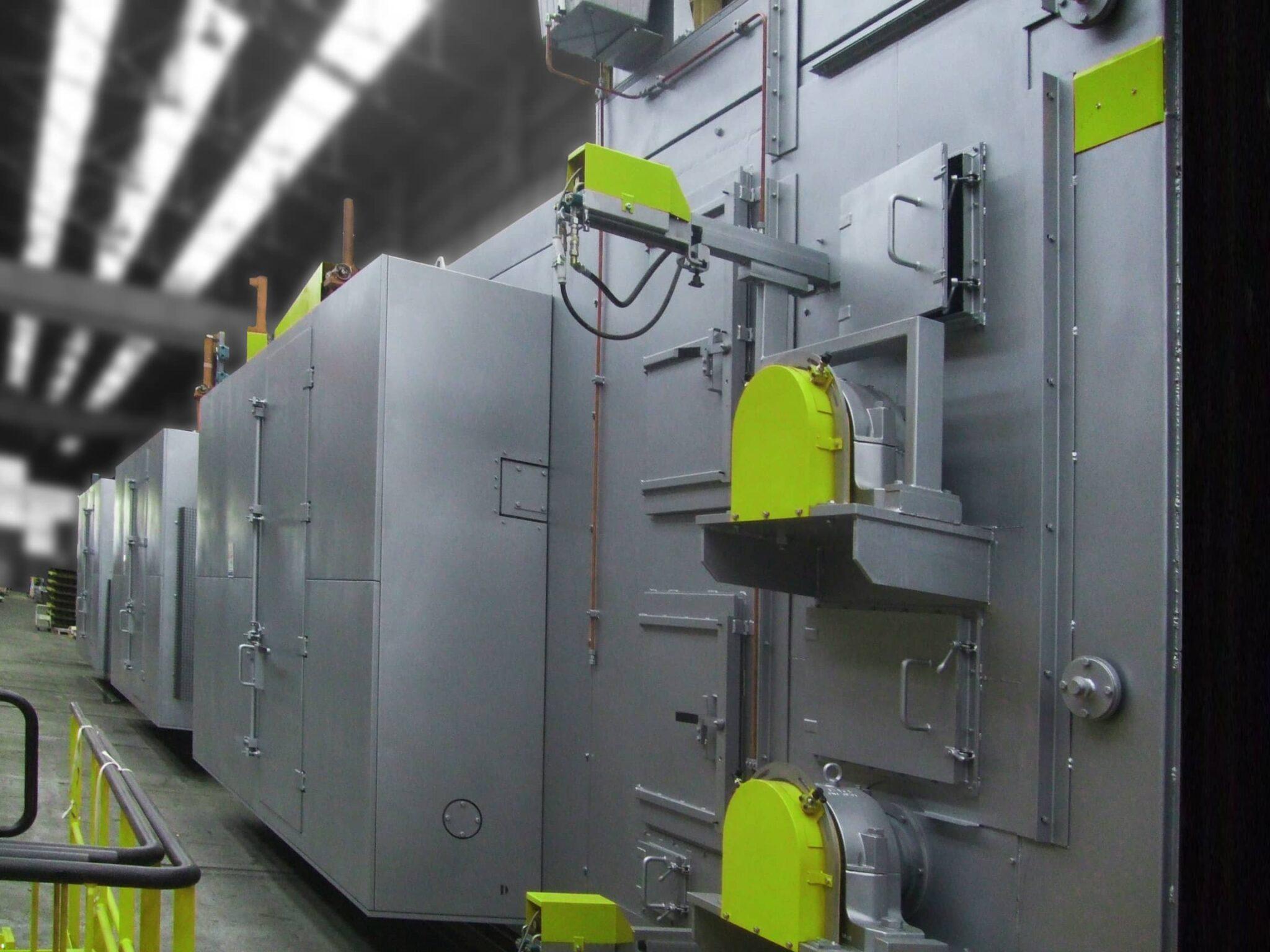
Curing conditions depend on the insulation product and its binder. FIMEC SH engineers the airflow, heating zones and oven settings around the products to be manufactured, including operating and maintenance requirements.
Products
Insulation products requiring thermal treatment
Design
Modular oven with adaptable width
Heating
Reversible zones, depending on the selected process
Monitoring
Operating parameters and production data
Density
Examples of products processed: 4 kg/m³ and 240 kg/m³
How it works
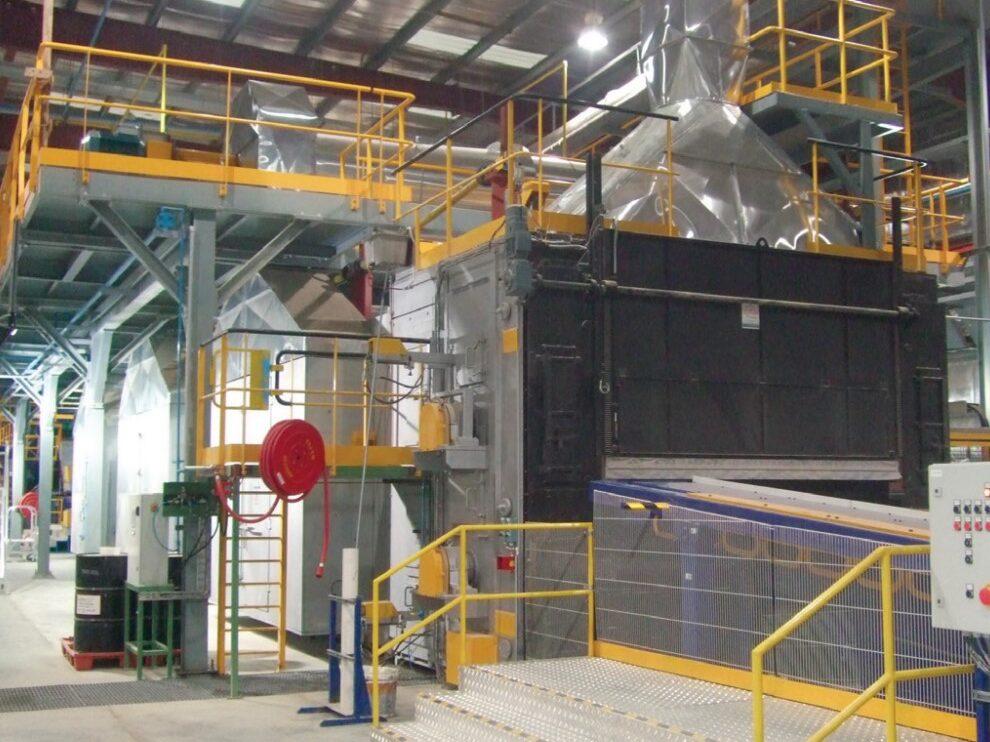
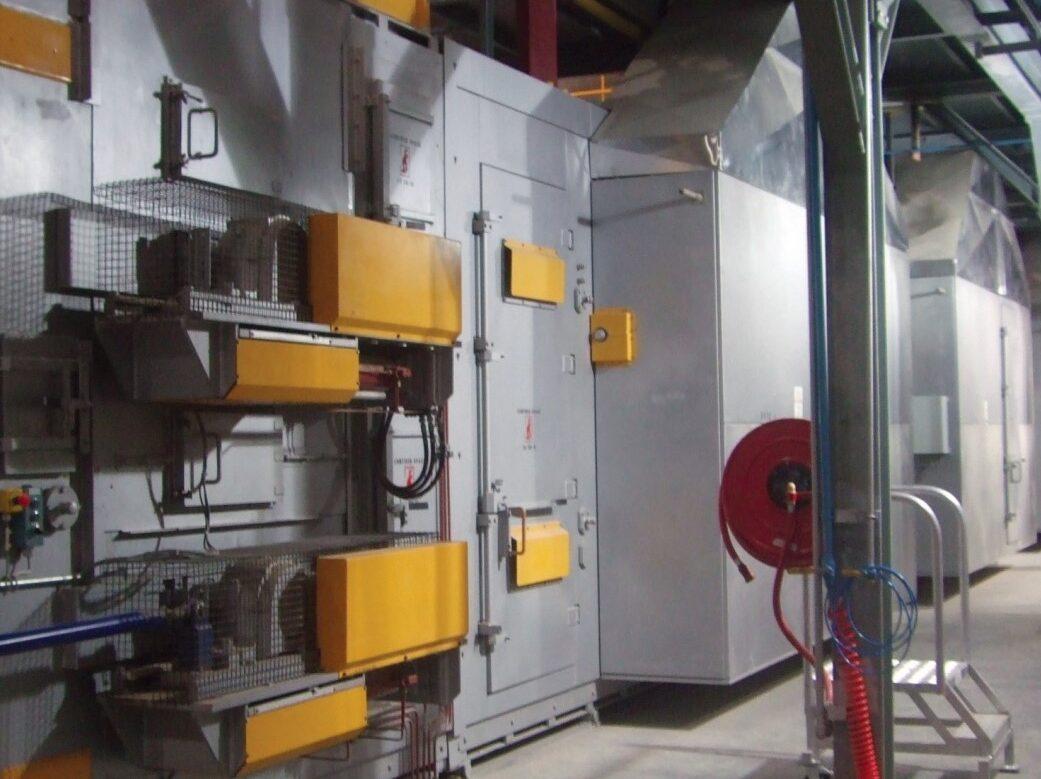
Airflow and heating zones are designed around the insulation products to be manufactured. The modular oven can be adapted in width. Reversible zones and a bypass allow airflow to be configured for the process. Settings established through simulation are checked during commissioning trials. External access to mechanical components supports maintenance, while the monitoring system collects operating parameters and production data.
Key features
Flatness
Requirement defined with the product and measurement conditions
Air distribution
Along the full length of each zone
Airflow
Circuit with bypass, depending on the heating arrangement
Access
Mechanical parts and bearings accessible from outside
Platform
Access to fans and skids
Safety
Safety PLC; functions specified for the installation
Data
Recording, analysis and production reports
Remote monitoring
Monitoring of operating parameters
Maintenance
Maintenance guidance and preventive monitoring by equipment
Protection
Mechanical components protected against binder-related corrosion
Air is supplied along the full length of each zone. Reversible zones and the bypass organise the airflow path through the oven.
Modelling prepares thermal and airflow settings, which commissioning trials then check with the selected products. The 4 kg/m³ and 240 kg/m³ examples relate to separate applications.
Bearings and mechanical components are accessible from outside, while a platform provides access to fans and skids. Component access forms part of maintenance planning.
Supervision can record parameters, produce reports and provide preventive maintenance information. A safety PLC manages the functions specified for the installation, including fire-protection functions defined during engineering. These functions do not replace operating procedures.
The production mix, densities and binders define the heat treatment. Flatness requirements for calibrated products need to be tied to measurement conditions.
Sealing and energy monitoring support consumption control. Expected consumption is established with the actual operating rate and commissioning trials rather than assuming the same saving for every product.
Used in these solutions
Production lines for mineral wool insulation boards
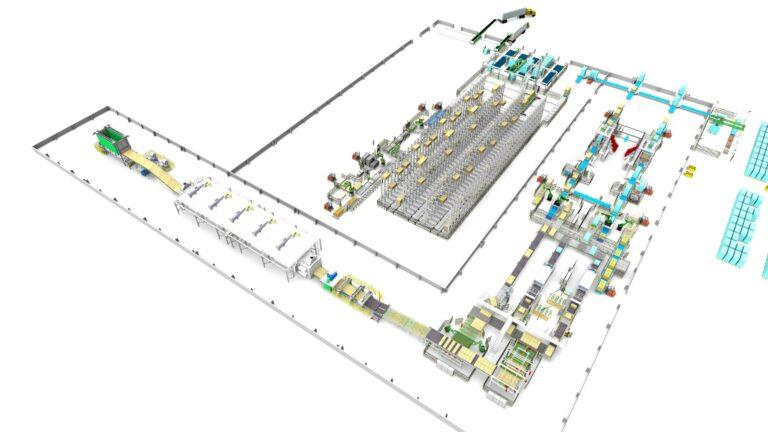
After fibre production, the mineral wool line turns fibres into boards ready for dispatch. FIMEC SH provides equipment for collection, forming, curing, cutting and packaging.