

EQUIPMENT
Stackers for insulation boards and panels
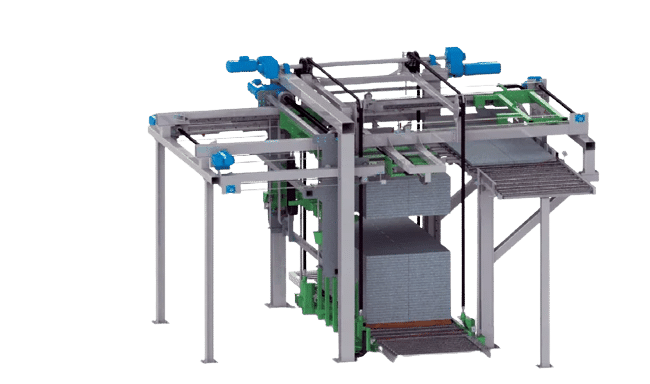
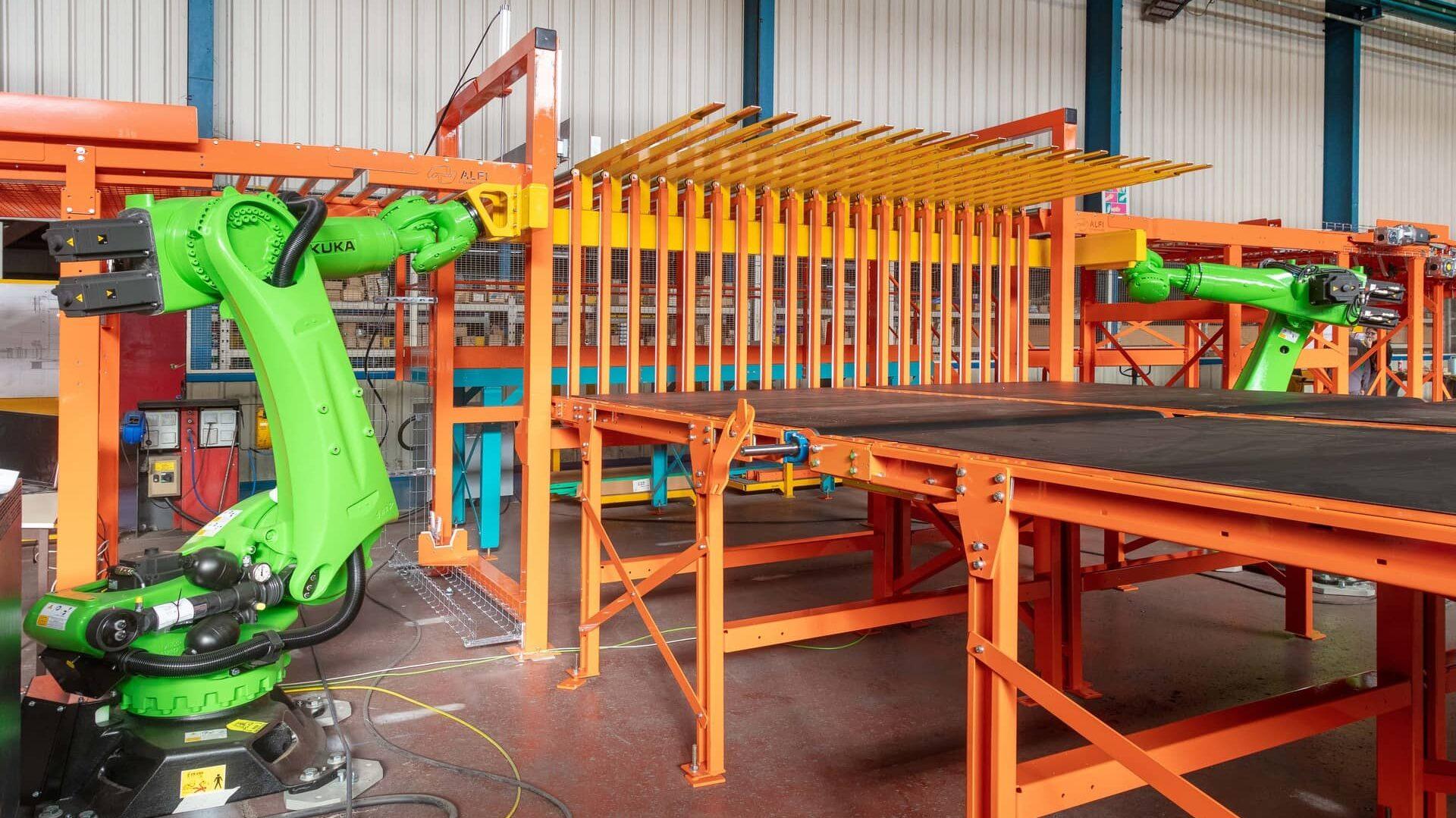
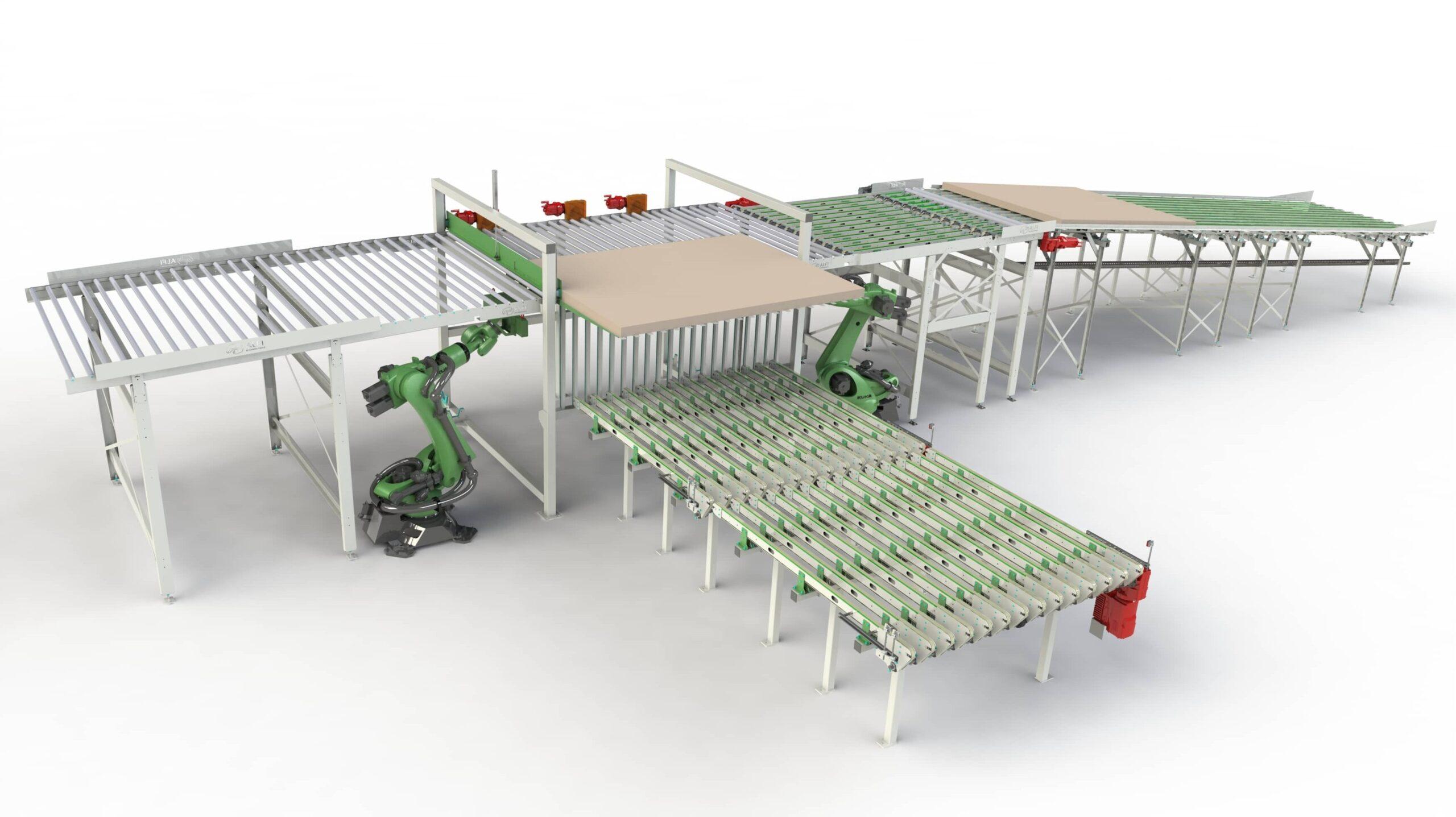
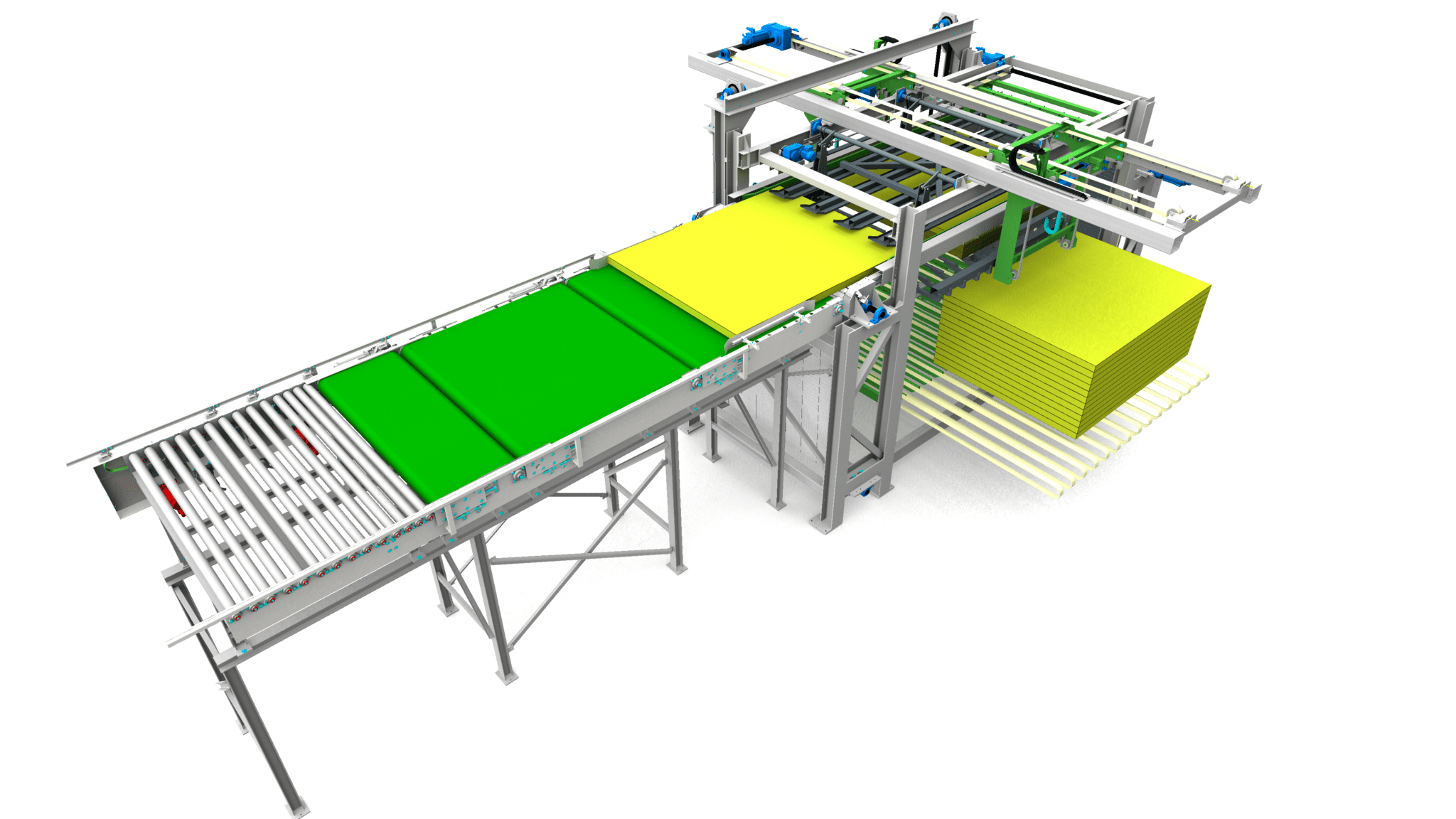
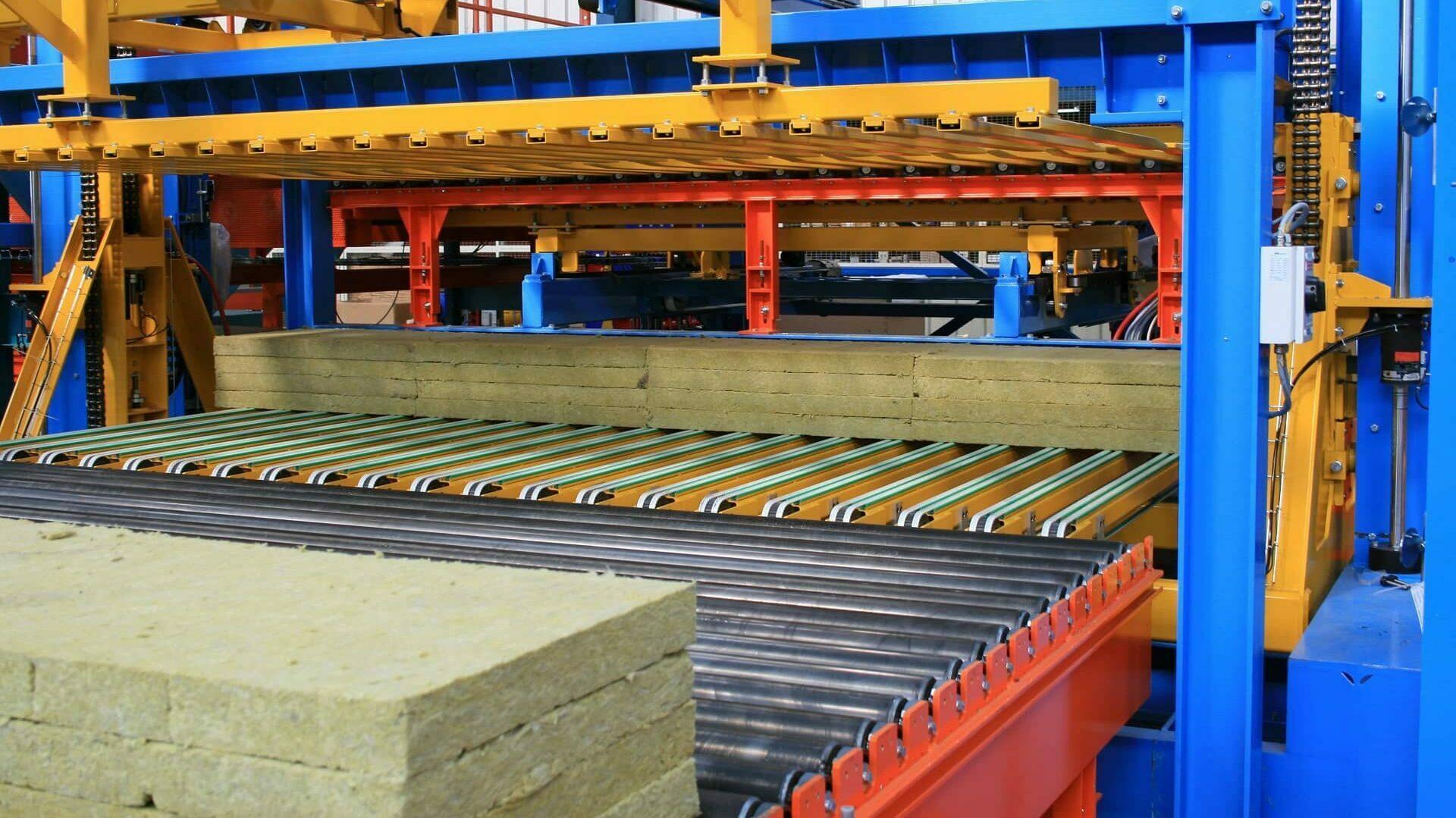
The stacker groups boards into stacks for packaging. FIMEC SH selects fork, curtain, direct-to-pallet or robotic stacking according to board formats, product handling requirements and the output rate of the line.
Products
Insulation boards and panels
Function
Stack formation
Technologies
STF fork, STP pallet, STC curtain or STR robot
Control
Adaptive stacking speed
STR 1200
Width × length: 1,200 × 2,400 mm; 12 strokes/min
How it works
Board pickup and placement must preserve the wool and form an aligned stack. Stacking speed adapts to the incoming product flow. Fork, curtain, pallet and robotic systems address different handling requirements. The robotic arrangement supports changes in format and production rate and can be installed without a dedicated platform. Selection takes account of downstream packaging requirements.
Key features
STR 2500
Width × length: 2,500 × 4,050 mm; 12 strokes/min
STC 1200
Width × length: 1,200 × 2,400 mm; 20 strokes/min
STC 2500
Width × length: 2,500 × 4,050 mm; 18 strokes/min
- STF: fork stacking.
- STP: direct placement on a pallet.
- STC: curtain stacking.
- STR: robotic stacking.
Board behaviour during pick-up and placement guides selection. The robotic version allows installation without a dedicated platform.
Formats are shown as width × length. Rates remain specific to each model; they do not indicate the number of completed stacks produced per minute. Stack height is defined with the products.
| Parameter / technology | Application specifications |
|---|---|
| STR 1200 | Width × length: 1,200 × 2,400 mm; 12 strokes/min |
| STR 2500 | Width × length: 2,500 × 4,050 mm; 12 strokes/min |
| STC 1200 | Width × length: 1,200 × 2,400 mm; 20 strokes/min |
| STC 2500 | Width × length: 2,500 × 4,050 mm; 18 strokes/min |
| STF 2000 | Width × length: 2,000 × 4,050 mm; 7 strokes/min |
| STF 2500 | Width × length: 2,500 × 4,050 mm; 12 strokes/min |
Stacking speed adapts to incoming boards. The station must also account for products per stack and the rate at which packaging receives completed stacks.
New formats are assessed alongside pick-up surfaces, the placement area and downstream packing.
Used in these solutions
Production lines for mineral wool insulation boards
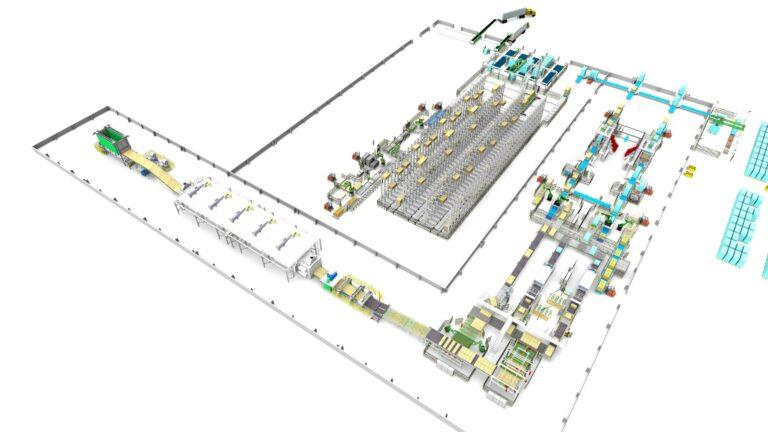
After fibre production, the mineral wool line turns fibres into boards ready for dispatch. FIMEC SH provides equipment for collection, forming, curing, cutting and packaging.